Beyond the Ratings
The Birth and Evolution of Hong Kong’s Category 3 System
HONGKONG CATEGORY 3
2/11/20263 min read
For many film enthusiasts, “Category 3” (Category III) is a term synonymous with the golden era of Hong Kong’s transgressive cinema, a label that promised the extreme, the violent, and the taboo. But the origins of this system were far less about artistic rebellion and far more about a desperate colonial government trying to fix a decades long legal blunder while navigating the political minefield of the 1997 handover.
For 34 years, from 1953 to 1987, the British colonial government practiced film censorship without actual legal authority. While the government issued a “Note of Guidance” in 1973 to outline standards, these were merely internal administrative rules, not law. This meant that every film cut or banned during this period was technically done so illegally.
This legal vacuum was eventually exposed by a 1987 front-page article in The Asian Wall Street Journal, which revealed that the government had intentionally hidden this “legal flaw” to avoid public debate, particularly regarding its practice of banning films that might offend Beijing and affect Sino-Hong Kong relations.1
The revelation of illegal censorship forced the government’s hand. In 1988, the Film Censorship Ordinance was finally passed, officially institutionalising the three-tier classification system we know today:
Category I: Approved for exhibition to persons of any age.
Category II: Approved for all ages, but with a “Not Suitable for Children” warning. Later split into IIA and IIB as below:
Category IIA: Not suitable for children (advisory).
Category IIB: Not suitable for young persons and children (advisory).
Category III: Approved for exhibition only to persons who have attained the age of 18 years. 2
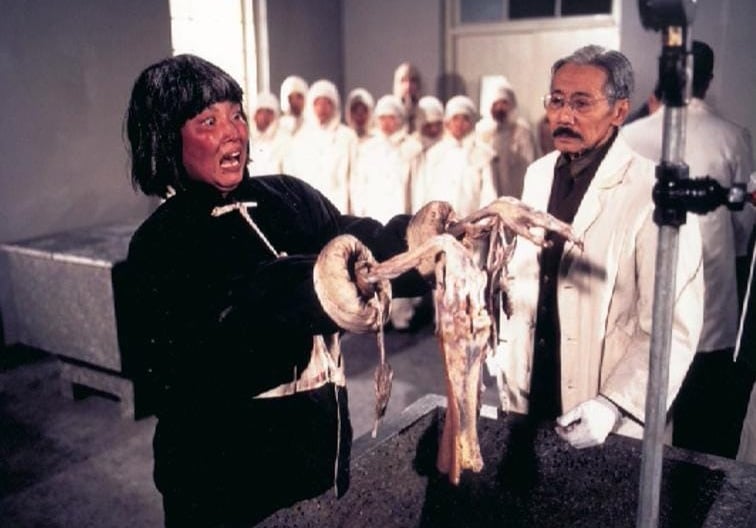
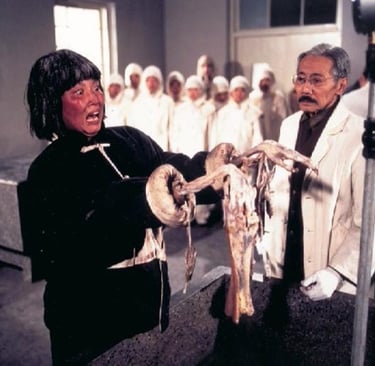
The first film to receive an official Category III rating was Mou Tun-Fei’s Man Behind the Sun in December 1988, a graphic depiction of war atrocities committed by the Empire of Japan in China during WW2.
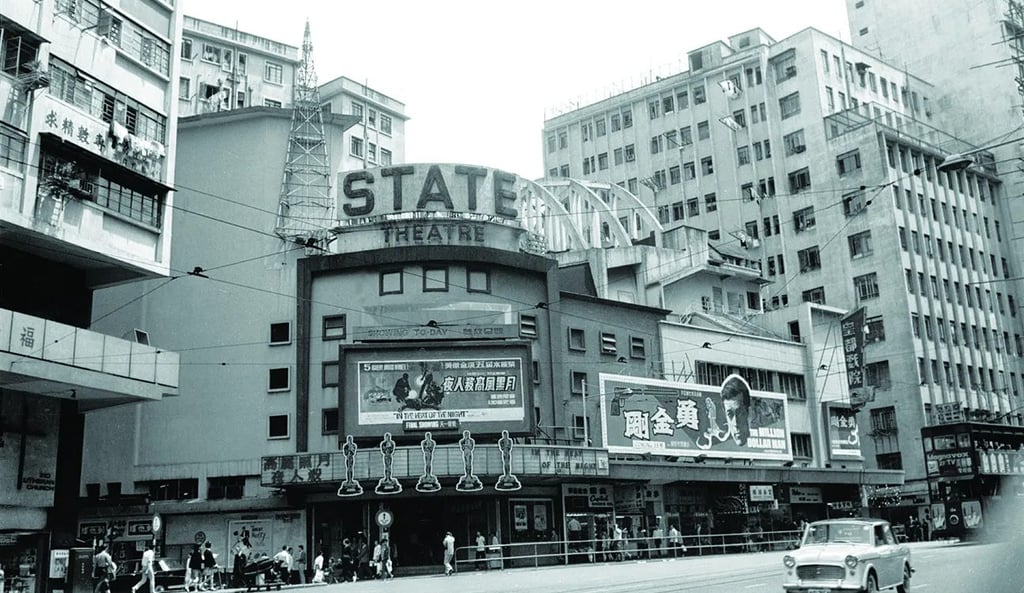
State Theatre Hong Kong 1968 photo from The Hollywood Reporter
While the public focused on the protection of minors from sex and violence, the true battleground of the 1988 Ordinance was political. The original bill included a “good relations clause,” allowing the government to ban any film that might “seriously damage good relations with other territories”. Under British colonial rule, censorship in Hong Kong was a centralised tool used primarily for maintaining political stability and racial harmony rather than moral regulation, especially focusing on suppressing content that could incite anti-colonial sentiment or offending Chinese government.
Legislators like Martin Lee fought fiercely against this, arguing it was a tool for pre-publication political censorship. Although the clause remained in the 1988 version, persistent pressure eventually led to its removal in 1994, ensuring that “political correctness” could no longer be a legal basis for banning a film in Hong Kong.3
Ironically, the strictness of the Category III rating became a powerful marketing tool. Producers of low-budget films began to chase the rating as a “selling point,” knowing that the 18+ label made a movie more alluring to its target audience. In terms of home entertainment, Category III rated films tend to achieve greatest longevity and much better commercial success.
The Untold Story (1993) from Herman Yau is a landmark of the genre. Despite its rating, it grossed an exceptional HK$15,763,018 during its original theatrical run. It was so popular that it earned lead actor Anthony Wong the Best Actor award at the Hong Kong Film Awards, a rare feat for an exploitation film (Even Anthony Wong himself explicitly said that he found this academic recognition bizarre and he’s been vocal about his initial distain for the film)4. 3 years later, Yau’s Ebola Syndrome (1996), one of the most notorious and popular cult films, reunited with Anthony Wong and solidified their status as icons within the genre.
Man Behind the Sun (1988)
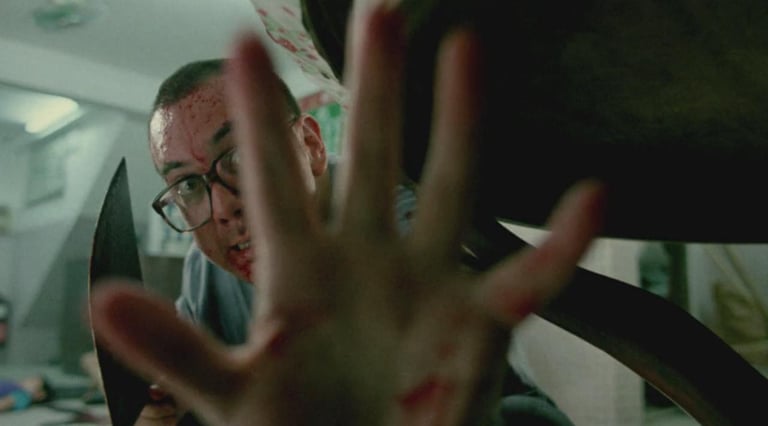
The Untold Story (1993)
However, it is worth noting that the rating didn’t grant total freedom. For example, the 1993 thriller The Untold Story had over four minutes of footage cut by censors despite its adult-only rating.
The Category 3 system was born from a convergence of social concern, legal necessity, and the looming shadow of 1997. It transformed Hong Kong film censorship from a high-handed, secretive colonial practice into a transparent, rule-of-law system, one that allowed the industry to flourish even as it began to self-discipline under the gaze of the north.
Yau Lai To Herman, The progression of political censorship: Hong Kong cinema from colonial rule to Chinese style socialist hegemony, 2014, p.194
https://www.elegislation.gov.hk/hk/cap392!en.pdf
Yau Lai To Herman, The progression of political censorship: Hong Kong cinema from colonial rule to Chinese style socialist hegemony, 2014, p.204-220
Category III: The Untold Story of Hong Kong Exploitation Cinema
Contact
Reach out for screenings and collaborations
© 2026. All rights reserved.