
32 Bodies and Zero Moral Residue
Riki-Oh: The Story of Ricky (1991)
HONGKONG CATEGORY 3
3/26/20263 min read
dangerous Rate: ★★★★★
Riki-Oh: The Story of Ricky is a classic Hong Kong Category III film adapted from the Japanese manga of the same name, and “classic” is exactly the right word, because this is a film that simply cannot be judged on a good-or-bad binary.
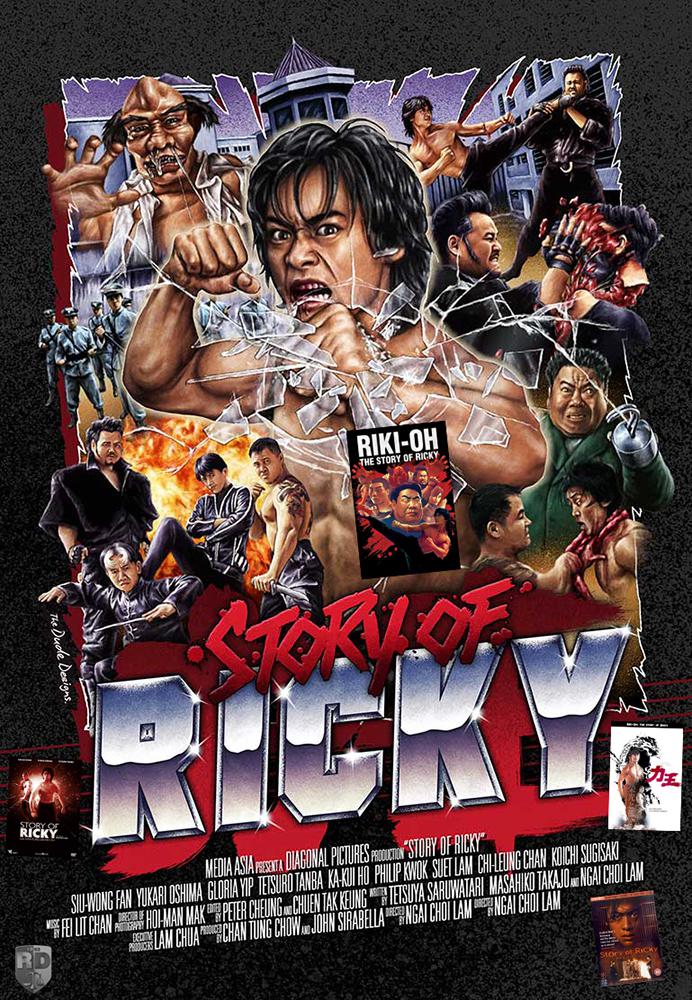
Starring Fan Siu-wong, the film follows Ho Ricky, a boy born with extraordinary strength who, under the guidance of his family’s old friend Sheng Kwai, masters Iron Qi Gong, a technique that allows him to concentrate his inner energy qi into a single point of limitless force, capable of making any solid object crumble like a cucumber beneath his fist. When his girlfriend Ying Ying is killed after accidentally witnessing a drug deal, Ricky takes his revenge, kills the dealers, and is sent to prison. The year is 2001, the time when capitalism has privatised every institution imaginable, and of course prisons included. The facility doubles as a source of cheap labour and a sprawling, hidden marijuana plantation. A man of Ricky’s moral fibre, constitutionally incapable of watching the weak be crushed, is naturally going to bring about a rather thorough prison “reform.”
The director of Riki-Oh, Ngai Choi Lam, trained as a cinematographer under Japanese DP Nishimoto Tadashi. Nishimoto had worked at Shintoho Pictures before being recruited by Shaw Brothers in the 1960s on a generous contract. By his own recollection, Hong Kong filmmaking at the time lagged about a decade behind Japan technically, yet the Shaw Brothers’ new-wave wuxia pictures were steadily displacing Japanese samurai films as the dominant force in Asian cinema. Hiring Nishimoto and his Japanese colleagues turned out to be a natural fit. Hong Kong cinema began absorbing the Western techniques these cinematographers brought with them, such as Eastmancolor, widescreen formats, and a stylistic shift toward heightened sensory stimulation, delivering kinetic speed, and gritty realism to the audience.
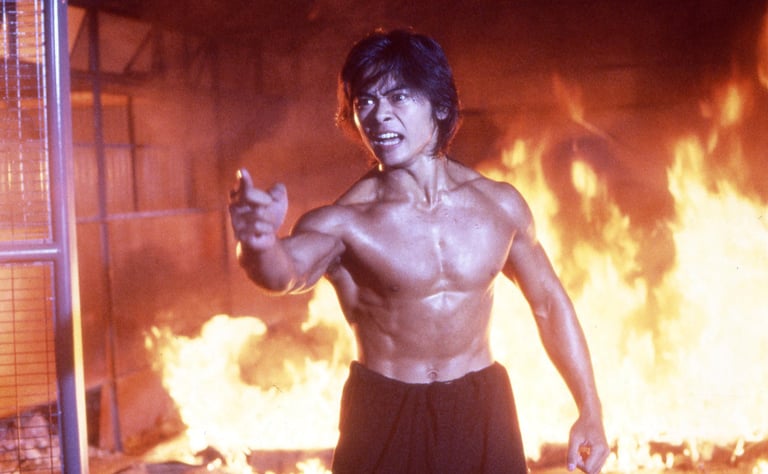
Riki-Oh is a triumphant exercise in sensory-overload filmmaking. The reason it resists any good-or-bad verdict, as I said at the beginning, is that its stylisation has become its own self-contained universe. Not only is the story drawn from manga, the aesthetic is manga to its bones. Characters are pure archetypes, morally flat and graphically rendered. The settings are deliberately unmoored from reality, and the budgetary constraints produce a kind of minimalist absurdism, imagine American Psycho re-coloured in lurid cartoon hues. The action choreography treats the laws of physics as a polite suggestion. The severed tendons of classic wuxia fiction are, in Riki-Oh, elastic enough to be stretched and tied in knots, and apparently self-healing, but that almost goes without saying. A single punch can send half a skull flying across the room. Every wall, every body, every supposedly impenetrable surface is one fist away from collapse. The action flows with such breezy confidence that it never even occurs to you to question whether any of this is physically possible.
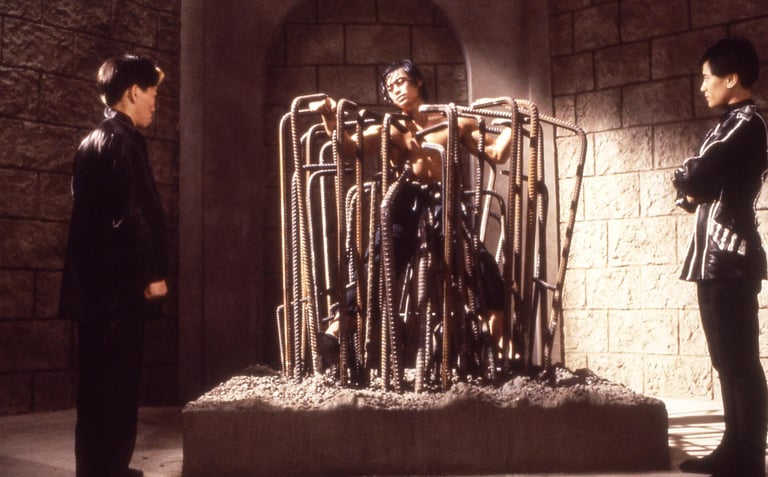
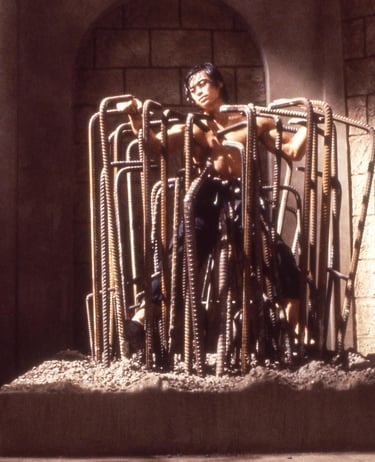
A German film forum once tallied Riki-Oh‘s body count at 32, (interestingly, the prison’s deputy warden is killed by the warden himself, not by Ricky. One wonders whether this was an in-joke: the actor playing the deputy warden, Fan Mei-sheng, is in real life Fan Siu-wong’s biological father.) None of these deaths leave any moral residue whatsoever. The excess is simply too grand. What human being could ever muster the resolve to strangle an opponent with their own intestines in a final act of mutual destruction?
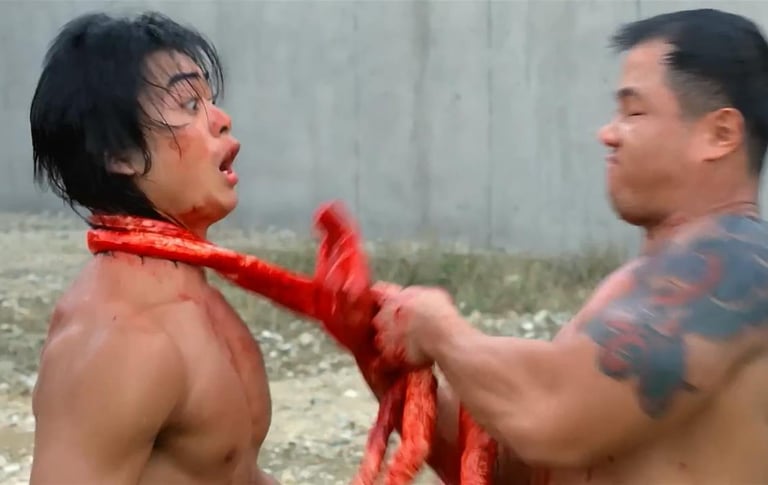
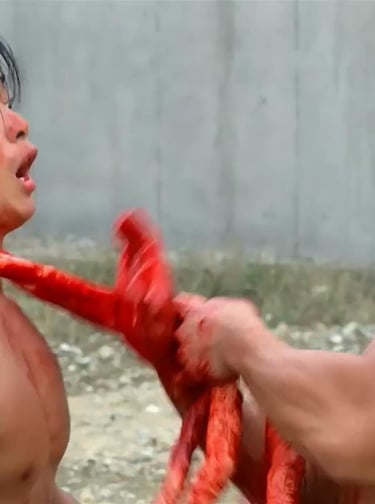
All in all, Riki-Oh is essential viewing for any Category III enthusiast. It is so thoroughly, unapologetically stylised, clumsy and fluid at once, bare-bones sets drenched in geysers of blood. In the final scene, Ricky’s last punch bursts clean through the prison wall, and every inmate walks free into the open air. justice is definitively served.
If you want to see this film on big screen, click like and let us know
Contact
Reach out for screenings and collaborations
© 2026. All rights reserved.